

Light is the fastest thing ever known besides the mind(One’s mind can be faster than light joking). The speed of light in a vacuum is 299,792,458 meters per second. Though in The Earth’s atmosphere the speed of light decreases still it is as fast as in a vacuum. When passing through a diamond it slowed to less than half of its original speed. Through passing to a diamond its speed is 124,000,000 m/s (approximately 3.00×10 to the power 8 m/s). The light of speed is denoted as ‘c’.
The light of The Sun takes 8 minutes and 17 seconds to travel the distance to The Earth. If one could travel at the speed of light he/she could go around The Earth 7.5 times in a second or he/she could go to the moon in 9 seconds approximately.
Since ancient times scientists and others want to know more about light.
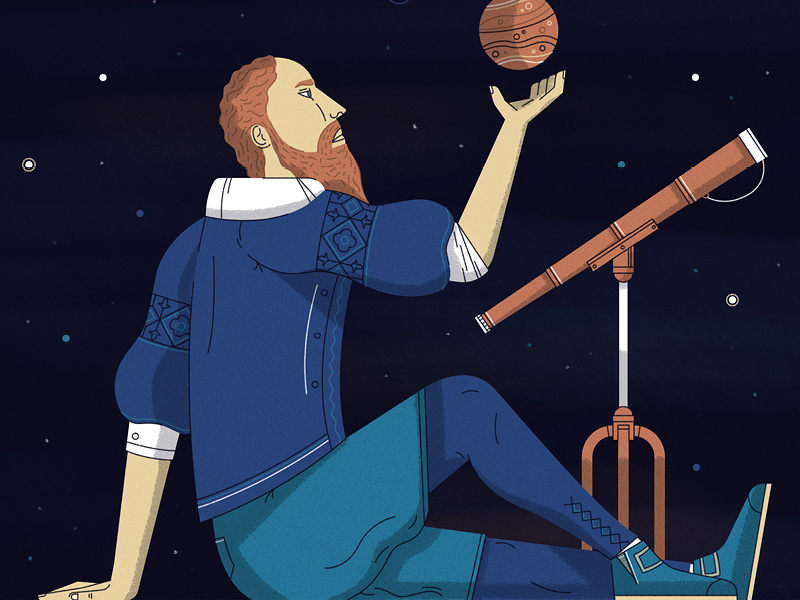
In 1667, the Italian astronomer Galileo Galilei stood two people on a hill at a distance of less than a mile, each holding a shielded lantern. One uncovered his lantern; when the second saw the flash, he uncovered his, as well. By observing how long it took for the light to be seen by the first lantern-holder (and factoring out reaction times), he thought he could calculate the speed of light. Unfortunately, Galileo‘s distances were too small to see a difference, so he could only determine that light traveled at least ten times faster than sound.

When Albert Einstein first predicted that light travels the same speed everywhere in our Universe, He essentially stamped a speed limit on it as 299,792 kilometers per second (186,282 miles per second) – fast enough to circle the entire Earth eight times every second.
Einstein‘s special ‘Theory of Relativity’ permanently tied mass and energy together in the simple yet fundamental equation-
E = mc2 (E is equal to M* C square).
This theory became the ‘Theory of the Century’.
One of the most famous scientists Sir Issac Newton also gave the theory of light but there were loopholes in his theory. This theory is known as Newton’s corpuscular of light.

That is-
1. Light consists of very tiny particles known as ‘corpuscular’.
2. These corpuscles on emission from the source of light travel in straight lines with high velocity.
3. When these particles enter the eyes, they produce images of the object or sensation of vision.
4. Corpuscles of different colors have different sizes.
This little equation predicts that nothing with mass can move as fast as light, or faster. The closest humankind has ever come to reaching the speed of light is inside of powerful particle accelerators like the Large Hadron Collider and the Tevatron.
The first photo of The Earth and The Moon in a single frame was captured by Voyager-

1 on 18 September 1977. Voyager–1 was launched on September 5, 1977, and after traveling for approximately 13 days it traveled a distance of 7.25 million miles or 11.66 million kilometers with a speed of 62140 km/h. It can be imagined that the distance made by Voyager–1 can be covered in 1/20 second by the speed of light.
There are lots of articles based on the speed of light and every day scientists exploring the light that will throw LIGHT on our future.
Listen to Music Be An Amazon Prime Member

Be An Amazon Businessman and Get Huge Discounts

Listen to Audio Books and Save The Trees


Post a Comment
0 Comments